If you have been blogging for more than a few months, you have undoubtedly had to deal with content theft on more than occasion.
Since it has been a couple of years since I have written about online content theft, I felt it was the perfect time to write an up-to-date post outlining some of the ways you can catch someone stealing your content, as well as what you can do to protect the content have worked so hard to create.
How to find out if your content is being stolen?
Before I get into the steps you should take when you catch someone stealing your content, let me give you a few ways to find out if your content is being stolen:
The most common way that I have caught content thieves is through trackback notifications. As long as you are receiving trackback notifications via email, you should be able to catch the majority of content scrapers. Just be sure you click through all your pingbacks so that copied posts don’t go unnoticed.
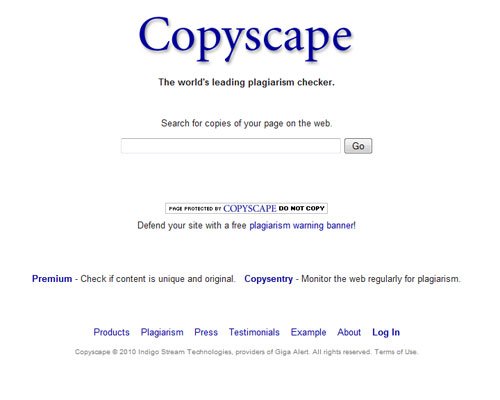
Copyscape is an online service for detecting plagiarism. Their basic service is free for a limited number of searches per day, per domain. They also offer a more advanced paid services called Copyscape Premium and Copysentry. Their Copysentry service will automatically scan the Internet on a daily or weekly basis, and email you whenever new copies of your content are found.
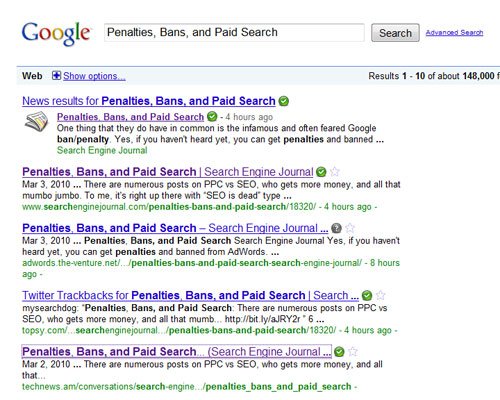
You can also use search engines like Google to detect content theft. The best way to do this is to copy a unique excerpt from your post and paste it into a Google search. If it’s fairly unique, you can also copy your post’s title and paste it into a Google search. Using this technique is a simple but effective way to detect if someone has copied your post word for word.
What Can You Do When You Catch Someone Stealing Your Content?
In addition to several basic steps that you can immediately take, there are also a few extra tricks you can use to protect your content:
- Contact the blog or website’s owner and politely ask them to remove the stolen content. 95% of the time, this has been the only step I’ve needed to take. You can use the Whois Lookup from Domain Tools to help you find the blog or website’s owner contact information. On the rare occasions when this isn’t successful, move on to the next steps.
- Contact Google and file a Digital Millennium Copyright Act (DMCA) complaint. In addition to Google giving your site credit for the original content, filing a DMCA complaint may result in Google completely removing a blog or website that is full of stolen content from their index. You can also file a Spam Report with Google to help fight back against content thieves.
- Contact the blog or website’s hosting company and file a Digital Millennium Copyright Act (DMCA) complaint. Hosting companies are required by law to shut down the blog or website until the stolen content is removed. Most reputable hosting companies already have procedures in place for lodging your DMCA complaints with their security or abuse departments. The key to successfully using this technique is that you will need to prove to the hosting company that you were the first one to publish the content. A simple and effective way to do this is by using the free Wayback Machine from Archive.org. This technique has worked for me on several occasions when a blog or website owner refused to remove the stolen content on their own.
Bonus Tips for Dealing with Content Thieves
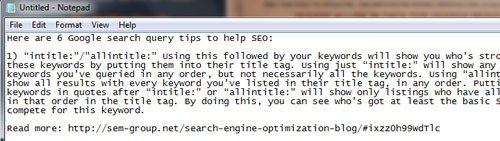
Credit for this tip goes to my friend Ann Smarty – You can use a free script called Tynt to automatically create a link back to your blog whenever someone copies and pastes content directly from your blog. After you have installed this script on your blog, you can see how it works by copying and pasting a short paragraph from one of your blog posts into Notepad:
Change any hotlinked images to something crazy!
This one will provide you with a good laugh. Below is an example of an image I once used in a stolen post:

Keep in mind that this only works if the thief hotlinks the image from your server, rather than saving the image and uploading it to their own server. You can use this tip manually, but you also can automate the process by using .htaccess and mod rewrite. This short .htaccess tutorial will show you how to automatically change your hotlinked images to whatever alternate image you would like to display.
What strategies have you used to deal with content scrapers? Please share your experiences in the comments!
This post is part of our Guest Blogging contest, if you like it then why not sharing it with your friends by retweeting it? this will give credits to the author and a better chance to win one of our awesome prizes. By the way.. you also can participate in our contest, it’s not late!


Ehab Attia October 5, 2012 at 8:49 pm
Copyscape is Great tool for way to track the content theft from your blog. and try to protect your images also to don’t make load to your hosting.
Nick September 30, 2012 at 10:31 am
DMCA notifications are useful, though many scrapers and other copyright infringers are not in the US so copyright laws may not be enforceable. In those instances, Google has a DMCA reporting dashboard which makes it pretty easy. https://www.google.com/webmasters/tools/dmca-dashboard
It never fails to amaze me that some of these clowns will copy almost your entire site (including the parts about creating original content!), then say “prove it” when presented with a DMCA notification. Simple enough with copyscape, wayback, and I have even used things like Diigo or Delicious bookmarks to help prove original publication date.

Nick recently posted..Check Your Head – Meta Tags, Titles Still a Top SEO Priority
Razeen Harris September 10, 2012 at 1:16 am
I had to deal with content thieves very often and if you contact them asking to remove the links they never reply unless you give some monetary rewards in return. The best way is to file Dmca complaint and ask Google Adsense to ban their account in suspicion for plagiarism
Satrap from Make Money Online September 28, 2011 at 8:24 pm
What a great post Gerald.
I have seen my content stolen far too may times that I simply gave up. I mean most of these sites go out of business in a few months or so any way. Most of them are newbies who red on a forum or a blog about autobloggging and they think they can do it by stealing content. Of course, after a few months of not making a dime, they simply give up the site.
Of course, its always a good idea to report these things. To be honest, I really didn’t know who to turn to. So, I just didn’t worry about it too much. I think contacting Google or the host is very good option. Thanks.
Satrap recently posted..Google Work From Home Jobs- Scam or Legitimate?
Mark from TheBitBot SEM Blog July 16, 2011 at 6:06 pm
Great idea about changing graphics, Gerald.
I am sure that people have done this and put up some pretty offensive pictures as a means to deliver a message to scrapers.
Hilarious…:)
Mark
Olawale Daniel July 7, 2011 at 1:12 pm
This is very serious. I don’t even believe that people can be doing such a thing and still think they can taste success online. Thanks a lot for this awesome information.
Olawale Daniel recently posted..How To Backup Your Google Data (Part 2)
Rae March 29, 2011 at 8:02 am
This is really great. New things are explored. thanks for sharing this post.
Sietse March 15, 2011 at 6:57 pm
cool, hadn’t heard about Copyscape before. Going to give it a try right away!
Of course, that’s only to find stuff that already has been copied from your blog. I’m definitely going to try out that Tynt plugin to make sure I get a link back when my articles are copied.
Sietse recently posted..5 Internet Laws You Should Know Before Starting An Online Business
Maria Pavel February 21, 2011 at 5:55 am
What can I do if the content is posted on some free webhosting service or blog like blogpost? It happened to me in the past and there was nothing I could do about it..though I am pretty sure these pages weren’t stealing any traffic from my website with the copied content.
Maria
Maria Pavel recently posted..Salaries Of Certified Nursing Assistants
Gerald Weber February 21, 2011 at 9:24 am
If it is a free blogging platform like blogger, you can contact blogger and lodge a complaint. They have a tos and as far as I know posting unoriginal content is against their tos.
In fct I have a friend that had that exact issue and blogger suspended the account of the offender.
Gerald Weber recently posted..“I SERPd It On The Web” The SEO Show 4 Meet Mark Thompson 2-9-11 8pm EST
Maria Pavel February 21, 2011 at 11:57 am
Thanks for the tips Gerald, makes a lot of sense to contact the owners of the platform. I recall contacting the owner of the blogger but he didn’t bother removing the stolen content!
Maria
Maria Pavel recently posted..CNA Training In Alaska
Vijayraj Reddy from Make Money Online February 9, 2011 at 4:21 am
Copyscape is the ultimate way to track the content theft for our blog posts…
Navin February 8, 2011 at 7:41 am
Thanks for the wonderful article, atcully every blogger need to work against content theft. thanks again.
Navin recently posted..10 SEO Tips to Keep In Mind Before You Start a Blog or a Website
Tony Smith January 16, 2011 at 10:23 am
Thanks. I had now idea about the DMCA or how to deal with content thieves before I read this. Great info!
Tony Smith recently posted..Tips for Starting a New Blog Part 2
Tony Smith January 16, 2011 at 10:20 am
Thanks for the great article! I had no idea how to deal with content thieves and I didn’t know anything about the DMCA. (Okay, I’ve been living under a rock!) Seriously, thanks for posting this!!!
Tony Smith recently posted..Tips for Starting a New Blog Part 2
Rodger from sell textbooks January 14, 2011 at 10:46 am
Copyscape is a great way to ensure you are not being plagiarized. I did not know about the hotlinked images.
Vijayraj Reddy February 26, 2011 at 2:45 am
Hi Rodger, you can protect the hotlinked images from your hosting account also…
Vijayraj Reddy recently posted..Top 25 Best Google Adsense Revenue Sharing Websites List
Claire January 2, 2011 at 2:26 pm
I have know of a couple of other sites hotlinked the images on my site , its actually taking a lot of bandwidth but I don’t know how to deal with it properly. I guess you gave me an awesome idea how to do it. Great share. Many thanks!
Claire recently posted..HP Pavilion dv7-4285dx Reviews- Specs & Sale Price
Justin Germino December 22, 2010 at 2:39 am
I just recently purchased the 200 scans for $10 (.05 cents per scan) particularly to check for duplicate content from guest bloggers. I use a combination of copyscape and simple searches on google for my blog title or first 2 sentences to find content thieves on occasion. One good thing to do is put a copyright in your RSS feed by using something like RSS Footer for Wordpress, make it include a copyright statement and a link back to your site.
Justin Germino recently posted..The Expendables review
Tom December 3, 2010 at 7:25 pm
I’d never thought about changing images! That tip is absolute gold.
Tom recently posted..Legitimate Paid Surveys In Australia
Abhimanyu Singhal November 14, 2010 at 5:02 am
Thanks for this Copyscape. Although no one’s copied my content yet, I will use it regularly in future to prevent plagiarism.
Cheers!
Abhimanyu
Murray November 3, 2010 at 11:35 pm
A lot of it comes down to how much am I going to be pissy vs. how much does it really matter – I’d say if a major blog ripped your stuff than yeah, go after it but when it’s a scraper – do you really want to spend an hour or more trying to contact the person? Ehhh, just work on new content.
Murray recently posted..Small Business- The Importance Of A Website
Keith November 3, 2010 at 1:35 pm
I use Copyscape for written content and Digimarc for images. I also give my image names a little unique tag at the end of the file name. I do not know if this damages my SEO or not, but it makes it much easier to find image thieves. I also occasionally include a unique phrase in text to search for.
Keith recently posted..Oct 28- Santas Workshop by Norman Rockwell 1922
Suresh Khanal October 12, 2010 at 2:36 am
It is easily sensed that there has been great headache due to the content theft. I saw a few plugins implemented in some blogs that stops you from using copy command. Not only copy command but the whole context menu (the one you get by right clicking) is disabled. It appears a good solution to stop content piracy. But it has another side too:
I was writing a post and wished to quote some lines from some other blog. I was not stealing content from any corner. But because the right click on the page was disabled, I had to retype the text in my post. I did it but was not much happy to retype. Has content piracy that trouble so that I should block the legitimate uses as well?
I liked the concept of Tynt.
Suresh Khanal recently posted..Unsubscribe Me- I’m NOT A SPAM!
Gerald Weber October 12, 2010 at 12:20 pm
Yes Tynt is really cool.
I tried one the of disable right clicks plugins (it seemed to sound like a good idea.) but some people like to copy and paste their comments in case something goes wrong.
After several complaints I finally uninstalled the plugin.
Gerald Weber recently posted..Does SERPd Need a Copywriting Category
John October 11, 2010 at 1:30 pm
Great information here. I love the photo you added for when people take your images. I have a question though. What if you have a blog and you think something is interesting on someone elses, is it ok to post it but give a link to their site to show where you got the information from.
John recently posted..Falling out of love with Foursquare
Gerald Weber October 11, 2010 at 6:31 pm
I believe there is nothing wrong with writing about something due to being inspired by someone else’s post.
I do agree that it’s good form to link to the post that inspired you. Also most bloggers appreciate when you throw them a link so it’s also a great way to get noticed (and possibly make some new friends)
Gerald Weber recently posted..Does SERPd Need a Copywriting Category
John October 12, 2010 at 7:26 am
Thanks I have really been wondering about it. I think I will write a post just for him and highlight his blog. There is one in particular that covers all the things I am interested in.
John recently posted..Falling out of love with Foursquare
Gerald Weber October 12, 2010 at 8:17 am
As long as you aren’t copying the post word for word. I think it’s usually best to maybe cover a point or two not in the original post. (so you are adding something additional to the reader experience)
Like I said most bloggers are really pleased when their article inspires another to write something. And this is especially trust if there is a link involved.
Gerald Weber recently posted..Does SERPd Need a Copywriting Category
Trevor B. Reed October 4, 2010 at 2:49 pm
Awesome post! I didn’t know about the ability to lodge formal complaints with Google and the hosting company. In the past we have just gone public on Twitter with anyone we caught stealing our content. It was RT’ed multiple times and the person took down the content out of shame. I have seen the picture trick and it gets funnier and funnier each time. I will definitely save this post for the next time our content is stolen.
Trevor B. Reed recently posted..7 Incredible New Movies About Social Networking & Business
Pritam from Part Time Jobs September 30, 2010 at 1:06 am
Yes trackback and Copyscape are both the good way to check if someone steals our contents. If someone copied your content you can simple ask the person to give the credit otherwise you can proceed to make a complain the way you suggested.
In one of the article on Google’s blog I read that its OK to copy the conetnts as long as you add some extra value to the contents. They don’t generally penalize the people use the copied contents this way.
Deborah Schultz September 25, 2010 at 6:48 am
Links are good, content scraping is bad, right? There are a lot of gurus out there teaching content scraping as a way to get fast content on a commercial site. As a writer I always thought this was not a good way to do posts, especially in light of duplicate content problems, so I was never tempted. Thanks for the heads up.
TJ McDowell September 22, 2010 at 3:18 pm
I’ve found that people who have stolen my content have changed out a few words and called it their own. After they changed the words, it completely didn’t make sense. If I remember right, that’s called spinning, right? Either way, it doesn’t seem like it would be a smart way to build a website.
TJ McDowell recently posted..Business Hours – Why After Hours And Weekend Photographers Make Big Bucks
Nikki May August 23, 2010 at 1:07 am
Great post, Gerald.
I own several blogs and of late I have been having a problem with my content getting stolen. I have been looking around how for how I can solve this, and I came across your post.
Your suggestion of contacting the web master or person concerned and asking them to remove my content is what I have been doing. But it got me wondering: there may be more people stealing some of my content from my other blogs.
I am going to get the Tynt script by Ann Smarty you mentioned – I think that is what I need. Changing the hotlinked images to something crazy also sounds like it will teach people that steal content a lesson so that they won’t do it again!
Thanks again!
Nikki M
Warner August 18, 2010 at 3:22 pm
I use the RSS Footer plugin. Then if they use rss to scrape my content they give me a link. So far I have been too lazy to search them down so I figure this way I at least get a link.
Warner recently posted..Getting More Sales From Your Website
Paul August 13, 2010 at 10:07 am
I haven’t looked at Tynt, but on a site that had it NoScript prevented it from working – I tested by copy a few lines from the post and pasted them into notepad. No link was shown because the Tynt’s JS file couldn’t run.
I have just added a footer to my RSS feed, that hopefully will help me track down those that scrape my content. After finding them, I will determine what course of action I will take.
Paul recently posted..Find RSS Scrapers with the ©Feed WordPress Plugin
Aaron July 5, 2010 at 12:56 am
Hi Gerald. I just usually add a plugin that allows me to add a “signature” line to my RSS feed, where most content is stolen from. I just add a signature with the original article URL, main blog URL, and who wrote it. If they do decide to steal the content, at least I get a link back from it as well to the main blog URL

Aaron recently posted..Free Blogs
AIDY July 4, 2010 at 9:37 am
As an up and coming “fierce” blogger myself–I steered myself away from one community owner that was doing just that: scraping content from naive writers like myself, excited about being ‘noticed’ and what not. This is a handy post, nothing is more aggravating than to see your hard earned content and images being lifted. As soon as I am up and running again, I will be certain to ‘kibosh-a-tize’ my site.
tonyknuckles July 1, 2010 at 4:26 pm
It doesn’t bother me very much about others scraping anything off of my site. Not that big a deal.
tonyknuckles recently posted..Getting On A New Set Of Shoes For The Summer